Guest post written by the Groover team, the platform that connects artists with curators.
You have spent months building a playlist that holds up. Subscribers who come back, a theme that speaks to someone, regular additions. And yet your bank account never sees a cent of that audience. That is normal: Spotify pays no direct revenue to playlist creators, only royalties to the rights holders of the tracks being streamed. On a platform with 761 million monthly active users in the first quarter of 2026 and more than 9.67 billion playlists created since launch, there are still concrete, legal ways to turn your ear for music into income. Here they are, and above all, here is what to avoid.
What Spotify strictly forbids (and why it matters to you)
Before talking money, one line has to be drawn. Selling a guaranteed slot on your playlist in exchange for payment is payola, a practice covered by the US Communications Act of 1934 and explicitly banned by Spotify's terms of use. In practice, the platform's user guidelines forbid accepting compensation, financial or otherwise, in exchange for influencing the content of an account or a playlist. Even offering a paid placement as an "option", with no guarantee attached, is enough to break the rule according to Spotify's official community moderators.
This is not just a matter of principle: playlists caught doing it get shut down, and with them months of curation work, organic growth and artist relationships. There is no way back once the sanction lands, which makes the risk wildly disproportionate to the gain of a one-off paid placement. The good news is that you can be paid for your listening time and your judgement, as long as the final decision to add a track or not stays entirely yours. That distinction, between selling an opinion and selling a slot, is what opens the door to a real business model.
Sell your curation work, not a placement
This is the most direct model: platforms connect artists who want feedback on their track with curators willing to listen and comment on it, paid for their expertise and their curation work. The artist pays to receive reasoned, constructive feedback, not to be added. Payouts per track reviewed generally sit between 1 and 6 dollars on most platforms, with variations depending on your reputation and the size of your audience.
Groover, for example, runs on internal credits called Grooviz. A curator earns between 1 and 3 dollars per submission listened to, in exchange for mandatory written feedback within a week. The platform has processed more than 8 million submissions since it launched. If you run one or several playlists with a real editorial identity, applying as a curator lets you receive listening requests that match your editorial line, get paid for every piece of feedback you give, and keep full freedom to add the tracks to your selections or not.
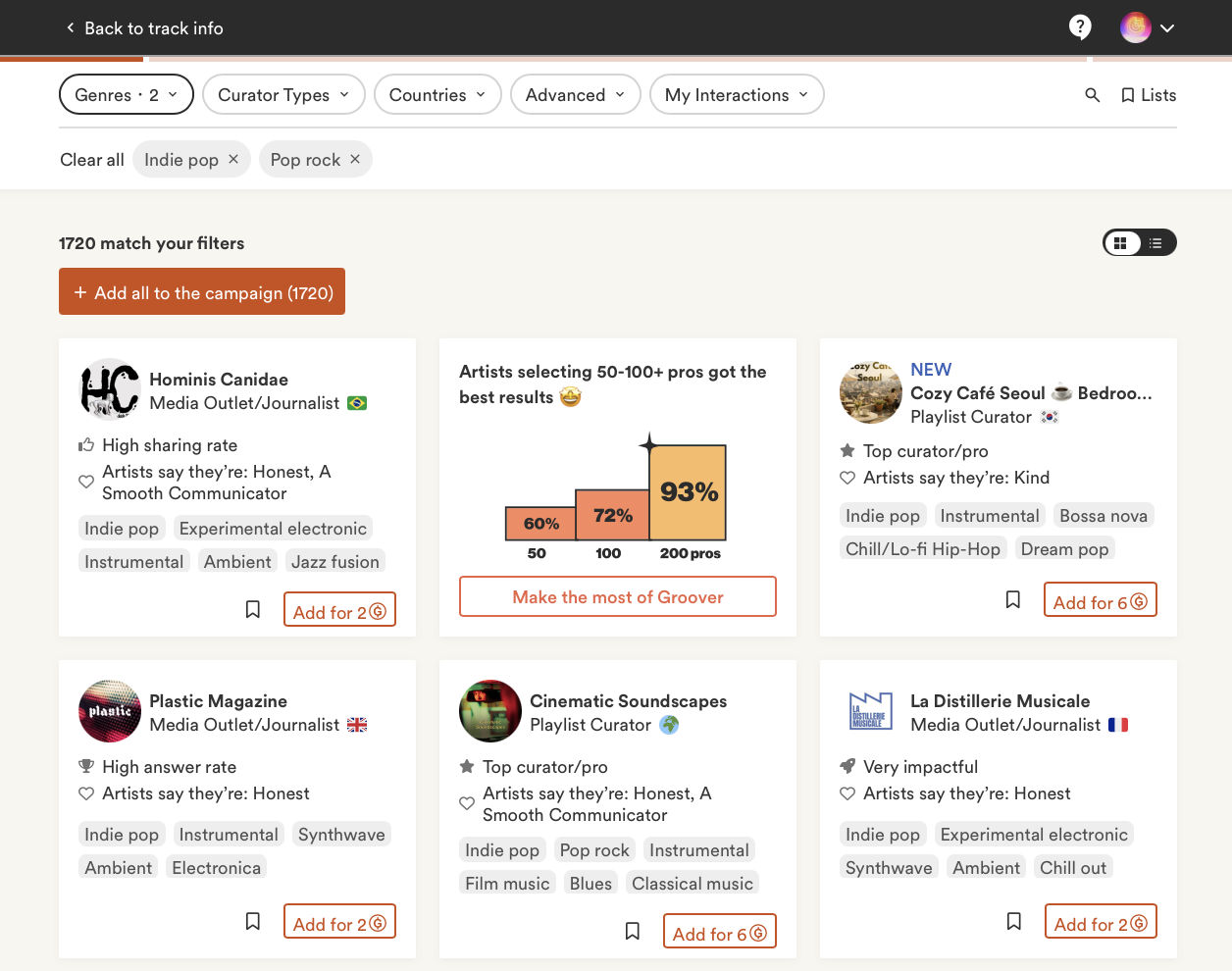
The platform is convenient because it filters artists upstream, which saves you from prospecting yourself, and it documents your feedback, which builds your reputation as a serious curator over time. It is also a good way to discover new talent before everyone else, and to centralise the requests and messages you receive about your playlists.
And if you are looking to grow your playlist audience before applying as a curator, social media and promotion tools like Soundlink are a solid first step.
Are you an artist too? Learn how to find the right playlists for your music, and get 10% off your first Groover campaign with the code STULYO2610.
Step outside the app to build a brand
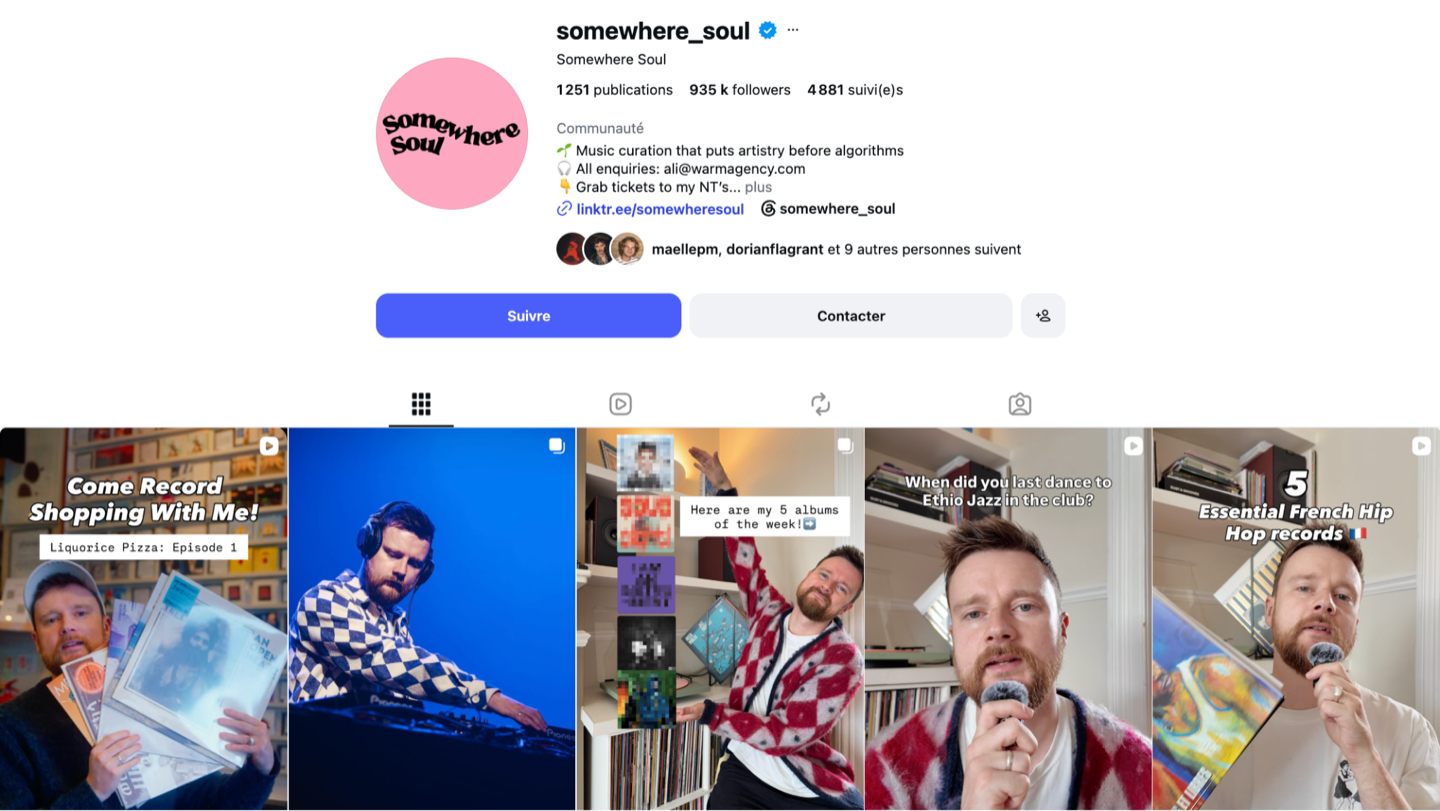
The real ceiling of the paid feedback model is that Spotify gives you no direct channel to sell anything other than your curation. The way around it is to make your playlist exist outside the app: a newsletter announcing new additions, an Instagram or TikTok account that stages your selection, a YouTube channel that reposts your favourite tracks. Those channels let you monetise through advertising, partnerships and community support, without ever selling a guaranteed placement, which stays strictly forbidden on those channels too.
It is also what makes you visible to brands: a playlist alone inside the app has no shop window to show a potential partner, whereas an active social account with clear engagement numbers does. One simple format that works well: a weekly post rounding up the three or four additions of the week, with an audio snippet and one line on why the track caught your attention. It takes very little time compared to curation itself, and it gives your community a reason to come back outside Spotify, where you can actually build a direct relationship with it.
Negotiate transparent brand partnerships
Once your playlist has a recognisable identity and an audience that reaches beyond Spotify, brands tied to music, audio or lifestyle may approach you for exposure. It usually takes the form of a mention on your social channels, or a piece of editorial content clearly labelled as sponsored, never a paid placement presented as organic. Rates depend directly on your reach, the size of your audience and the type of content: a few first collaborations will progressively tell you what that audience is worth and make it easier to monetise.
The rule never to forget here: a brand partnership pays for your visibility and your voice, never for adding a specific track to your list. Keep that distinction visible in your contracts and in your posts, with a "paid partnership" label.
Lean on your most loyal community
The last lever, often underused: asking your most engaged listeners directly to support your work. A Patreon or Ko-fi offer can give access to a secret playlist, a vote on the next additions, or early discovery sessions. It is a classic subscription model, but one that works particularly well when your community identifies with your musical selection more than with any single artist. Spotify has even opened a native bridge with Patreon for audio creators, letting paying subscribers access exclusive content straight from the app: a signal that the platform itself is pushing towards this kind of direct monetisation between creators and fans.
How much you can really earn, and how fast
Let us be honest about the orders of magnitude. Most independent curators earn a few hundred euros a month through feedback platforms, and only a minority of well established curators, with an organic and loyal audience built over years, actually live off it. The value is built over time and on the authenticity of the audience, never on a single move.
In practice, the combination that works best is progressive rather than simultaneous:
The first few months: you sign up on a feedback platform to generate a first income, get into the habit of documenting your feedback, and discover new gems.
In parallel: you open one simple channel outside Spotify, a newsletter, Instagram or TikTok, and you feed it as regularly as your playlist.
Once the audience exists outside the app: brand partnerships and subscription offers become available. That is when the numbers really change scale.
Where to start
Do not try to switch on all five levers at once. Pick your strongest playlist, the one with the best subscriber retention, and start with a single step from the list above. Build a selection people genuinely want to follow, within the platform's rules, and the monetisation opportunities will stack up naturally, one by one.
A note from the Stulyo team: before monetising a playlist, you need to know whether it is visible at all. Our Playlist Checker is free and tells you which keywords your playlist shows up for in Spotify search, and in which position.